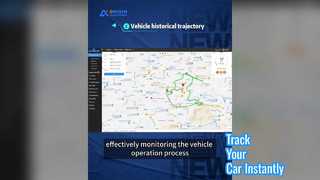
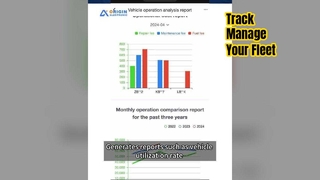
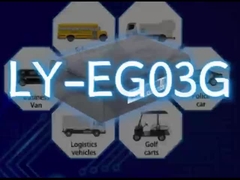
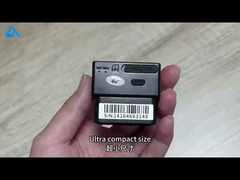
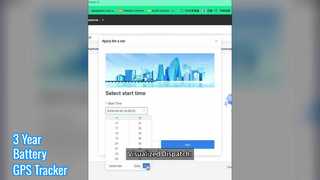
Brief: This video demonstrates the setup, operation, and key moments during typical use of the GMS-100 GPS Tracker. You'll see how to achieve instant vehicle visibility on a global map, monitor fuel consumption and idling time to reduce costs, and configure geofences for enhanced security. We'll walk you through the plug-and-play installation process and show how the free mobile app provides real-time tracking and historical route playback.
Related Product Features:
Track vehicles in real-time on a global map with 5-second update intervals for complete asset visibility.
Review past trips with high-precision route playback for delivery verification and incident investigation.
Monitor fuel consumption, maintenance costs, and idling time to identify inefficiencies and reduce expenses.
Set geofences for restricted areas and receive instant alerts when vehicles enter or exit zones.
Easy plug-and-play installation requiring no technical expertise with 12V-24V vehicle power connection.
Global 4G LTE coverage with included SIM card for reliable connectivity worldwide.
Free mobile app for iOS and Android devices with intuitive interface for tracking management.
24/7 customer support available for setup assistance and troubleshooting guidance.
FAQs:
What is the location accuracy of the GMS-100 GPS Tracker?
The GMS-100 provides location accuracy of less than 10 meters using its advanced GPS chipset with 22 channels and tracking sensitivity of -163dBm.
How quickly does the tracker acquire GPS signal after startup?
The tracker features a hot start time of 15 seconds and a cold start time of 60 seconds, ensuring rapid GPS acquisition for immediate tracking capabilities.
What communication systems and frequency bands does the tracker support?
The GMS-100 supports GSM and 4G (TDD-LTE/FDD-LTE) communication systems, operating on GSM bands 850/900/1800/1900MHz and multiple 4G LTE bands including B1, B2, B3, B4, B5, B7, B8, B20, B28, B34, B38, B39, B40, and B41 for global coverage.
How does the tracker help reduce operational costs?
The tracker monitors fuel consumption, maintenance costs, and idling time, allowing businesses to identify inefficiencies and implement strategies to reduce overall operational expenses.